05 · Travel
What to pack for a dog-friendly day trip
A well-packed dog day out is not about taking everything. It is about covering five needs: safe travel, water, shade, rest and a quick way home.
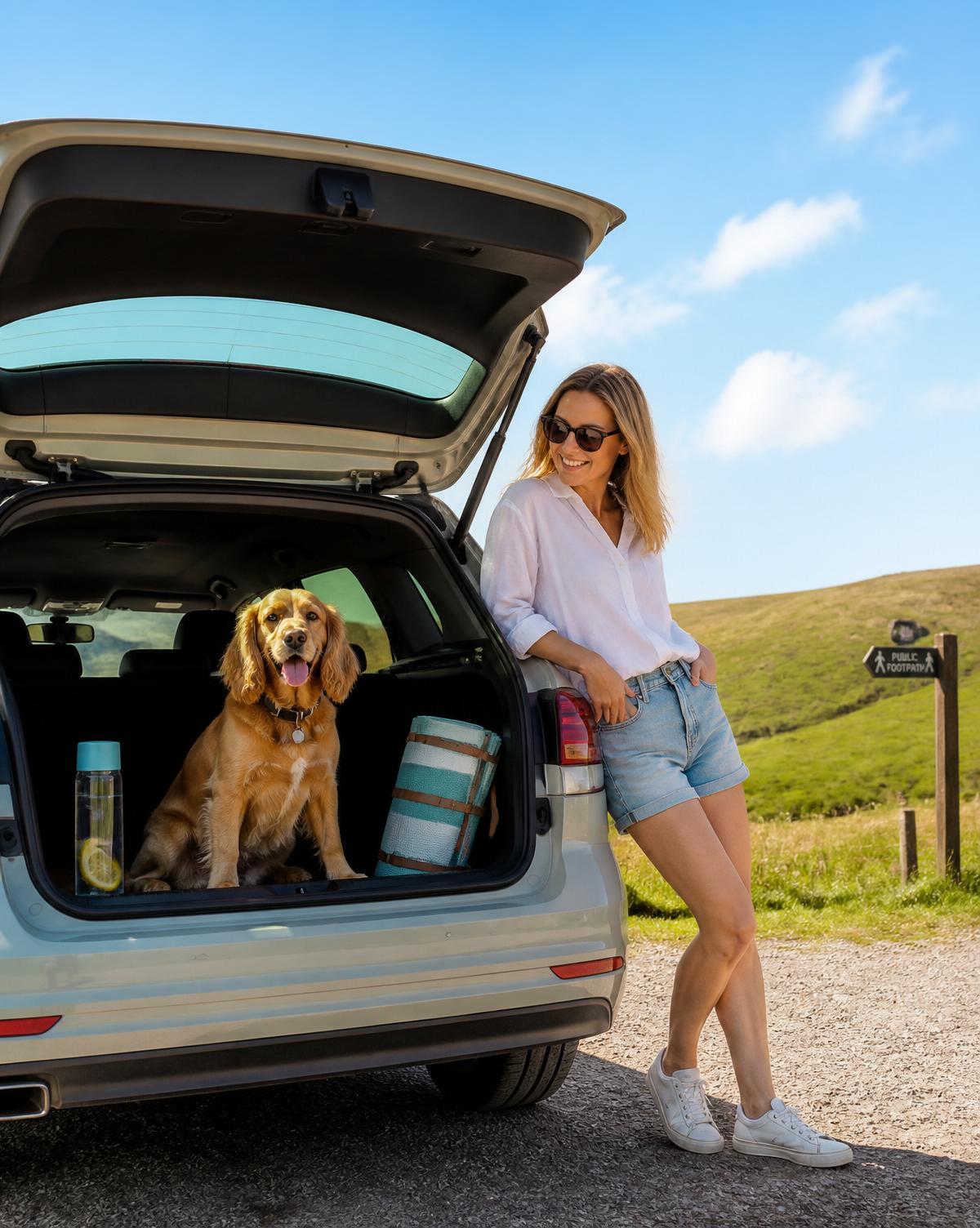
The best dog-friendly day trips feel easy because the important decisions were made before the boot closed. You know where the shade is, you have enough water, your dog is safely restrained and you can leave without fuss if the weather or their behaviour changes. You do not need a car full of equipment — pack around five needs: safe travel, hydration, shade, rest and clean-up.
Before you pack, decide whether your dog should come
Check the forecast for the whole day, not only departure time. Look at humidity, direct sun and the likely temperature when you plan to return. Confirm dogs are allowed at the venue, on the route and at any food stops. Search for shaded areas and identify a nearby vet.
Then consider your dog. Crowds, long car journeys and unfamiliar places are not enjoyable for every pet. A trusted sitter and a cool home may be the kinder day out for a very young, elderly, flat-faced, anxious or unwell dog.
Pack one small “grab first” bag
Keep the essentials where you can reach them without emptying the car:
- more clean drinking water than you expect to use
- a travel bowl or bottle with an integrated drinking trough
- lead, harness and a visible identification tag
- waste bags and a sealed bag for used items
- a towel or cloth for muddy paws and spills
- any prescribed medication, stored exactly as directed
- your vet’s number and the details of a local practice near the destination
The kit should follow the weather
A TrailSip™-style bottle reduces bulk because the drinking trough is built in. The BreezeWalk™ kit groups hydration with an optional water-activated vest — but the pack should never override the weather decision.
Restrain your dog safely in the vehicle
The UK Highway Code says animals should be suitably restrained so they cannot distract the driver or injure themselves or others during sudden stopping. Depending on the dog and vehicle, that may mean a suitable seat-belt harness, secured carrier, dog cage or dog guard. The restraint should fit correctly and allow comfortable positioning without giving the dog access to the driver.
Plan airflow before setting off. Use air conditioning or safe ventilation and block strong direct sun where possible.
Never leave a dog alone in a warm vehicle
Not with windows open, not in shade, not for a quick errand.
Build shade and rest into the route
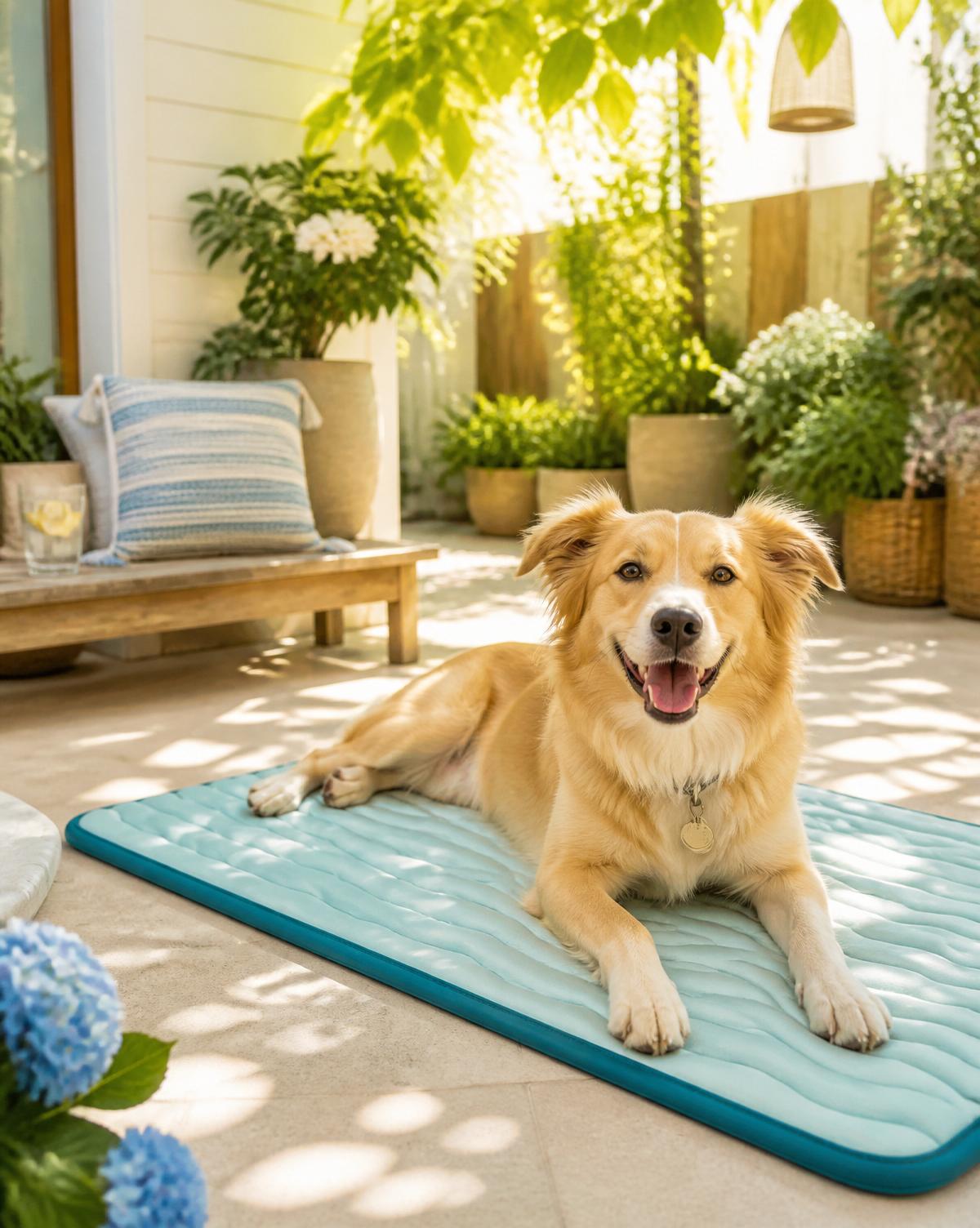
Do not rely on finding a tree when you arrive. Pack a portable shade option if the destination has limited cover, but ensure it allows good airflow. Add a familiar mat or thin bed so your dog has a clear place to settle. A cool-touch mat can support rest during supervised travel or at the destination — it does not make a parked car or exposed campsite safe.
Schedule calm stops before your dog looks tired. Offer water, allow sniffing and check breathing, gait and gum colour. A day trip is not a challenge to stay out until the itinerary is complete.
Add a compact dog first-aid kit
- sterile saline
- non-stick dressings and conforming bandage
- blunt-ended scissors
- tweezers or a tick-removal tool
- disposable gloves
- your dog’s medication and medical notes
- an emergency blanket for non-heat-related situations
Ask your veterinary practice how to use the items correctly. Do not give human painkillers or apply human creams unless a vet has specifically instructed you to.
Pack food with the day, not against it
Bring your dog’s normal food if you will miss a meal, plus a few familiar treats. Avoid a large meal immediately before or after strenuous activity. Keep food sealed and do not let your dog drink from stagnant water, seawater or unknown outdoor sources. If you are visiting the coast, rinse salt and sand from paws and coat with fresh water.
Know the “go home now” signs
Leave early if your dog:
- cannot settle or repeatedly seeks escape
- shows rapidly increasing panting
- slows, lies down or refuses to continue
- drools more than usual
- seems weak, confused or uncoordinated
- vomits, has diarrhoea or collapses
Suspected heat-related illness
Move to shade or a cool ventilated place, begin cooling with cold tap water and call a vet immediately. If possible, have another adult continue cooling during transport.
The most useful thing in your day-trip bag is not a product. It is a flexible plan — and permission to change it.
Ready to build a calmer summer routine?
Our cooling and hydration essentials are designed to support the plan you make — never to replace it.