03 · Walks
The seven-second pavement check
If you cannot comfortably hold your palm to the ground, your dog should not be asked to walk on it — but a stopwatch is only the beginning of a safer surface check.
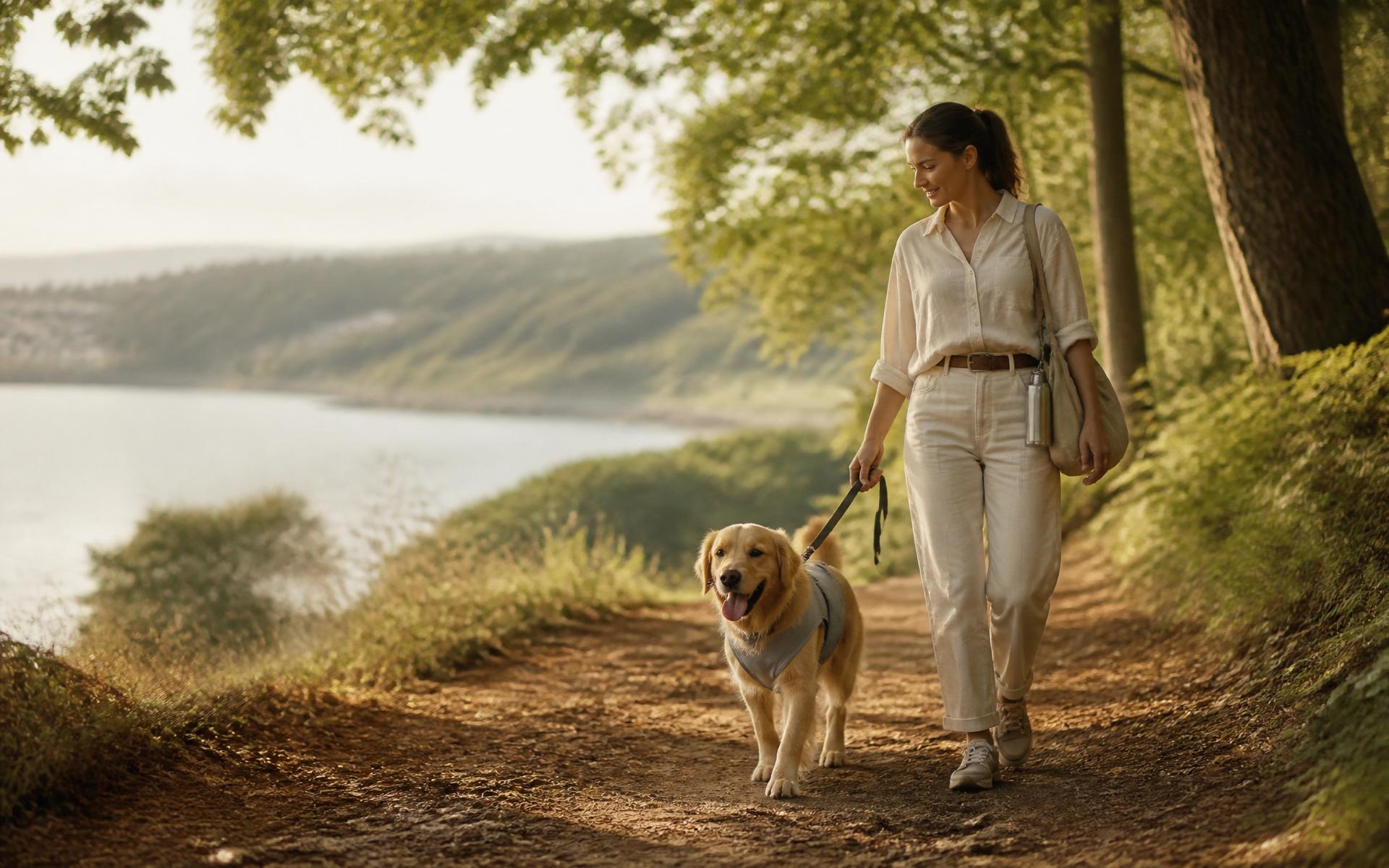
You step outside and the air feels pleasant enough, but the pavement has been absorbing sunlight for hours. For a dog walking barefoot, that stored heat matters.
“Place the back of your hand flat against the surface. If you cannot keep it there comfortably for around seven seconds, treat the surface as too hot for your dog’s paws.”
Some UK welfare guidance uses five seconds and some uses seven. The safest lesson is not to turn it into a stopwatch contest. If the ground feels uncomfortably hot at any point, choose another surface or another time.
Why the ground can be hotter than the forecast
Weather apps report air temperature measured under standard conditions. Pavement, tarmac, paving stones, sand and artificial grass can absorb direct solar energy and become much hotter than the surrounding air. Dark materials often absorb more heat, and sheltered urban areas may hold warmth long into the evening.
Cloud cover can change quickly. A route that felt fine on the way out may be hotter on the way home. Test the actual surface where your dog will walk, not a shaded patch beside it.
How to do the check properly
- 1Test the sunny part of the surface, not only the shade.
- 2Place your hand flat so a reasonable area of skin is in contact.
- 3Stop immediately if it feels painful or sharply uncomfortable.
- 4Repeat the test when the surface changes — for example, from grass to tarmac.
- 5Re-check later in the walk because surfaces continue to warm.
It’s a warning, not a measurement
Human hands and canine pads do not experience heat identically. A dog with previously damaged, thin or sensitive pads may need more protection, while a dog with tougher pads can still be burned.
Make a route decision, not just a surface decision
If the pavement is hot, the answer is not to hurry across it. Change the plan:
- walk earlier in the morning
- use a shaded natural path
- drive only if the vehicle can be kept cool and the dog safely restrained
- carry a small dog only if it is safe for both of you and the destination surface is suitable
- choose indoor scent games, food puzzles or training instead
Dog boots can protect paws when correctly fitted and gradually introduced, but they can also affect gait, trap warmth or cause rubbing. They are not permission for a hot walk.
Watch for paw discomfort
During and after a walk, look for:
- limping or taking unusually short steps
- refusing to move or repeatedly moving towards grass
- lifting one or more paws
- licking or chewing the feet
- redness, darkening, blisters or missing areas of pad
If you suspect a burn
Move your dog off the hot surface. Cool the paw gently under cool running water, prevent licking if you can do so without distress, and contact your vet. Do not apply human burn creams or break blisters.
Remember the dog above the paws
A pass on the hand test does not mean the whole walk is safe. A dog can develop heat-related illness on a paw-friendly grass route because exercise, humidity, direct sun, poor airflow or individual risk still overwhelms their ability to cool down. Check the ground, then check the dog. Seven seconds is a useful pause — the real habit is bigger.