01 · Featured
How to keep your dog comfortable on warmer walks
A better summer walk starts before the lead goes on. Use timing, route, water, shade and your dog’s behaviour to decide when to roam — and when to stay home.
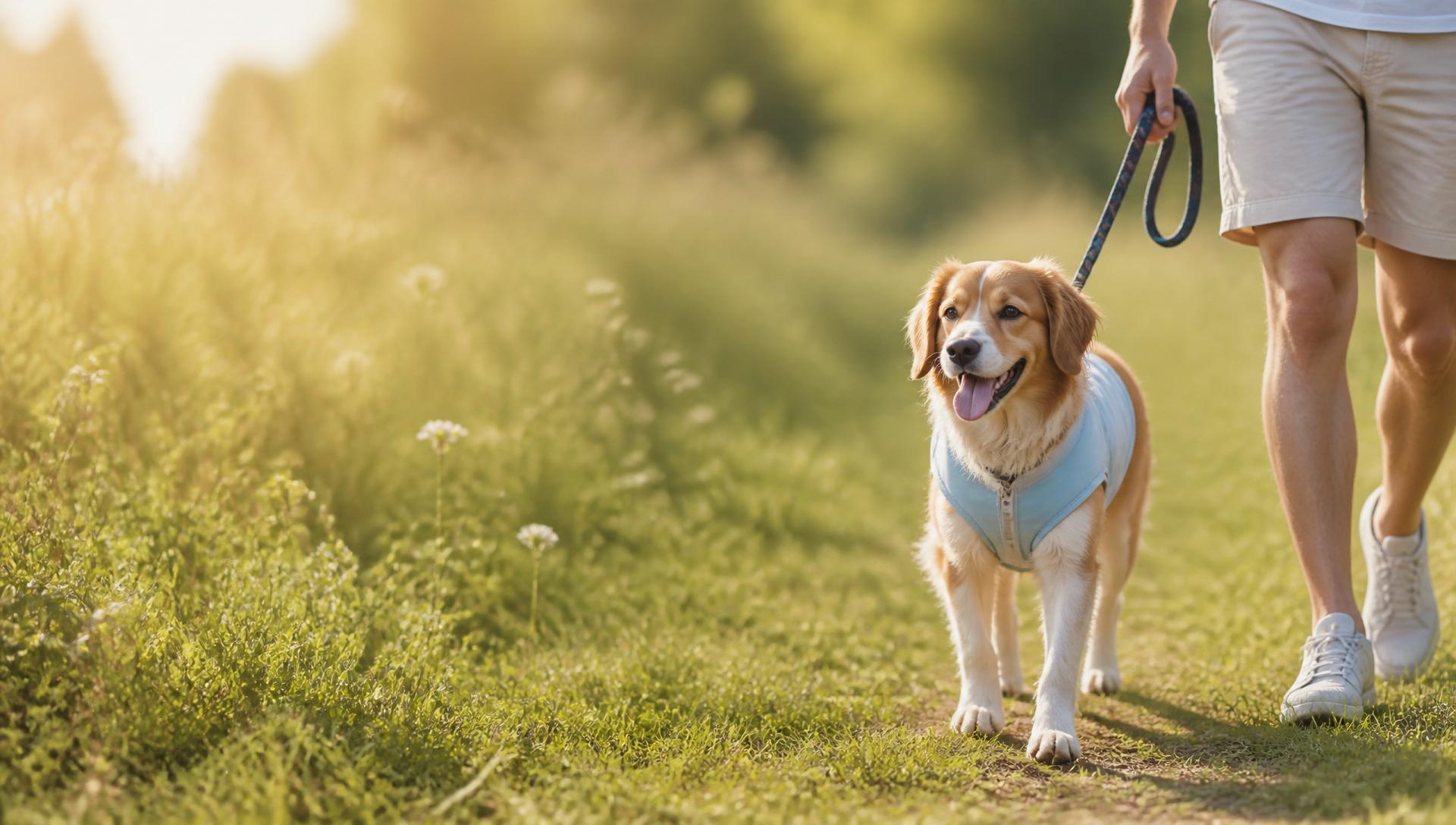
Warm weather can turn an ordinary walk into something that needs a little more thought. Dogs do not cool themselves as efficiently as people: panting does most of the work, and excitement can keep a dog running long after they should have slowed down. The kindest summer walking plan is not about squeezing in the usual distance. It is about making a good decision for the dog in front of you.
“Check the conditions first, adapt the walk second, and keep watching throughout. No product can make dangerous heat safe.”
Start with your individual dog
Two dogs can experience the same day very differently. A fit young dog may still overheat during energetic play, while an older, overweight or unwell dog may struggle on a gentle stroll. Flat-faced breeds such as French bulldogs, pugs and bulldogs have less efficient airways and need particular care. Thick-coated dogs, very large dogs, puppies and dogs with heart or breathing conditions may also be more vulnerable.
Before each warm-weather walk, ask:
- Is my dog already panting while resting?
- Have they eaten, exercised hard or become overexcited recently?
- Are they recovering from illness, taking medication or carrying extra weight?
- Is the route exposed, humid, hilly or short on shade?
- Can we turn back quickly if they are uncomfortable?
If the answer makes you hesitate, move the walk to a cooler time, shorten it or replace it with calm indoor enrichment. Missing one walk is far safer than pushing through heat because it is part of the routine.
Choose the coolest useful window
Early morning is often cooler than late evening because pavements, walls and artificial surfaces can hold heat after the air temperature begins to fall. Check more than the number on the weather app: direct sun, humidity, airflow and the temperature of the ground all affect how hard a dog must work to cool down.
Choose a shaded, familiar route with easy exit points. Woodland paths and natural grass are often kinder underpaw than tarmac or artificial grass, but any surface can become hot. Keep the walk calm and avoid fetch, running beside a bicycle or long bursts of play on warm days. A shorter sniff-focused walk can be more satisfying than a long march.
Pack water — and offer it before they are desperate
Bring enough clean drinking water for your dog and for you. A portable bottle with a built-in drinking trough, such as the TrailSip™ style, makes quick offers easier without carrying a separate bowl. Offer small opportunities to drink during breaks; do not wait until your dog is frantic or gulping.
Water is support, not protection
Drinking alone cannot prevent heat-related illness. Shade, a gentler pace and appropriate timing remain more important.
Use cooling support in the right order
For a suitable warm-weather walk, a water-activated vest can add evaporative cooling. Soak it in clean, cool water, wring out the excess and fit it so it sits securely without restricting the shoulders, chest, neck or breathing. Re-wet it when it begins to dry, and remove it if it becomes warm, heavy, dry or uncomfortable.
The DriftCool™ vest is designed for this support role: an optional layer after you have already chosen a sensible time and route. It is not protective armour against heat, and it is not a treatment for suspected heatstroke. Evaporation works best when there is airflow and the surrounding air is not already saturated with moisture. On still, very humid days, the effect may be reduced.
Learn your dog’s early change in behaviour
Do not wait for collapse. The first clue is often a change from your dog’s normal:
- panting becomes faster, louder or harder
- the tongue looks unusually wide or long
- they slow down, lag behind or stop
- they seek shade, lie down or resist moving
- drooling increases
- they seem restless, unfocused or less coordinated
Stop at the first concerning change
Move into shade or a cool ventilated place, offer water without forcing it, and begin cooling with water that is colder than the dog. Contact a vet immediately if you suspect heat-related illness. Heavy panting, breathing difficulty, weakness, vomiting, diarrhoea, abnormal gum colour, confusion, collapse or seizures are urgent signs.
A kinder summer walk can be a smaller one
Dogs do not measure a good day in kilometres. Ten relaxed minutes of sniffing in the cool morning, followed by a shaded rest and a food-search game at home, may be far more rewarding than a long hot route. The aim is not to “beat” the weather — it is to notice what your dog needs, make the easier decision early and leave enough energy for tomorrow’s adventure.
Ready to build a calmer summer routine?
Our cooling and hydration essentials are designed to support the plan you make — never to replace it.